
The Certificate
Why am I still writing about this

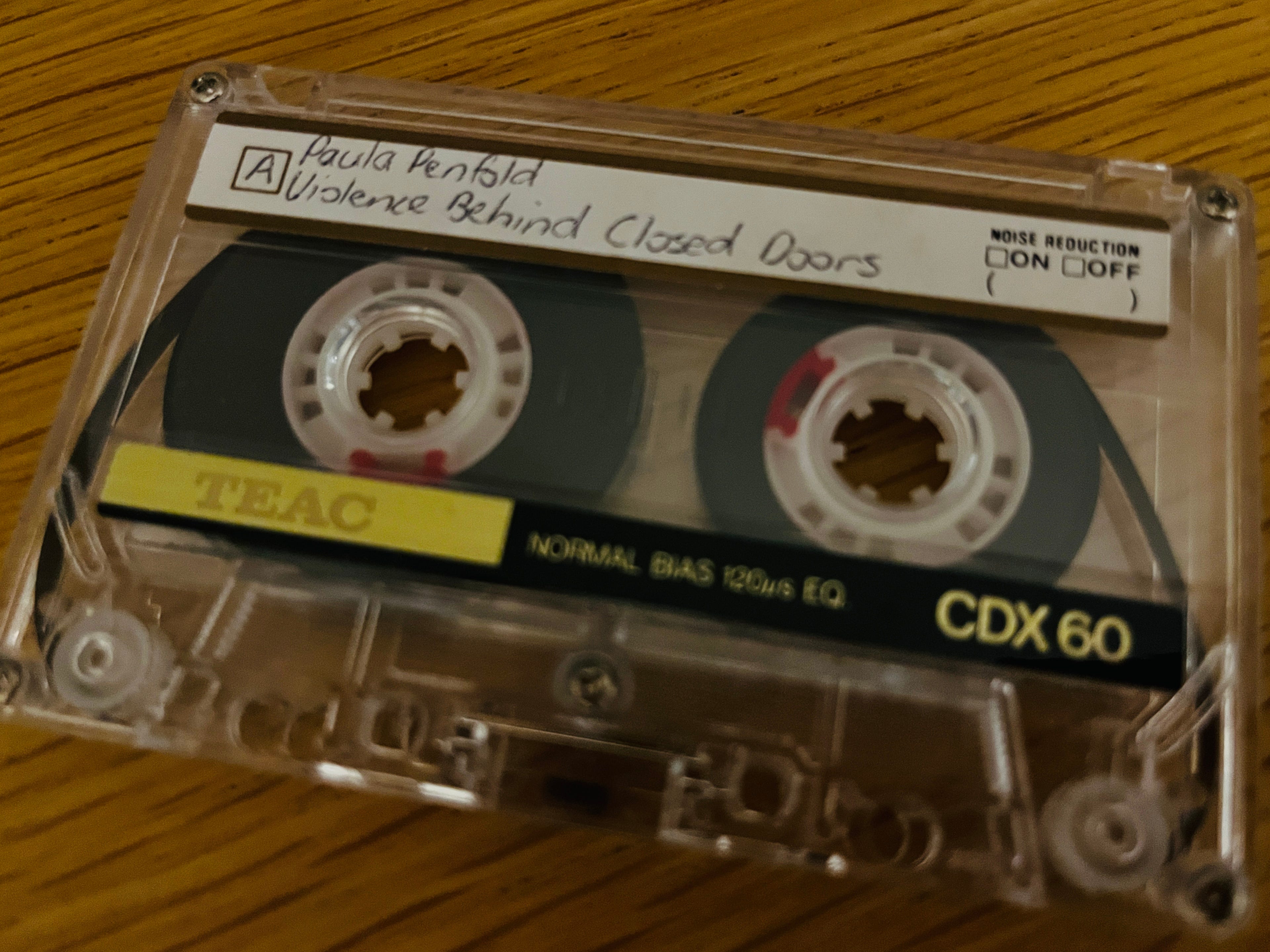
I made a really terrible documentary at journalism school. It was a requirement to complete the course, and needed to be half-an-hour long; an audio doco, recorded on a Christchurch Polytech tape recorder.
The most vexing question: what would it be about? Half an hour seemed a long time to fill.
I’d finished university the year before, where, for women’s studies courses and in feminist geography I had studied various aspects of violence towards women. (Years later, my 60 Minutes colleague, the veteran journalist Rod Vaughan, almost fell off his chair when I told him there was such a thing as feminist geography, let alone that I had studied it. RIP Rod, he was a lovely man.)
At university I had studied the theory but not the reality, so I decided to make my documentary about domestic violence (as it was known then – recently that term has fallen out of favour because it was too narrow, replaced by the more encompassing ‘family violence’).
I called the documentary Violence Behind Closed Doors. Yes, I really did. The only decent part of it was the interview, in which a Pākehā woman in her 50s set out her decades-long experience of violence at the hands of her husband. Why she was so generous as to tell it all to a 21-year-old journalism student, I still don’t know.
But she did, and it was deeply affecting.
Until I ruined it by recording the sound of a slamming door, and randomly interspersing that audio through the doco, in what I thought was an effective and subtle motif, which turned out, of course, to be a clunky cliche. I probably still have the cassette tape somewhere, but thankfully not the means to listen to it.
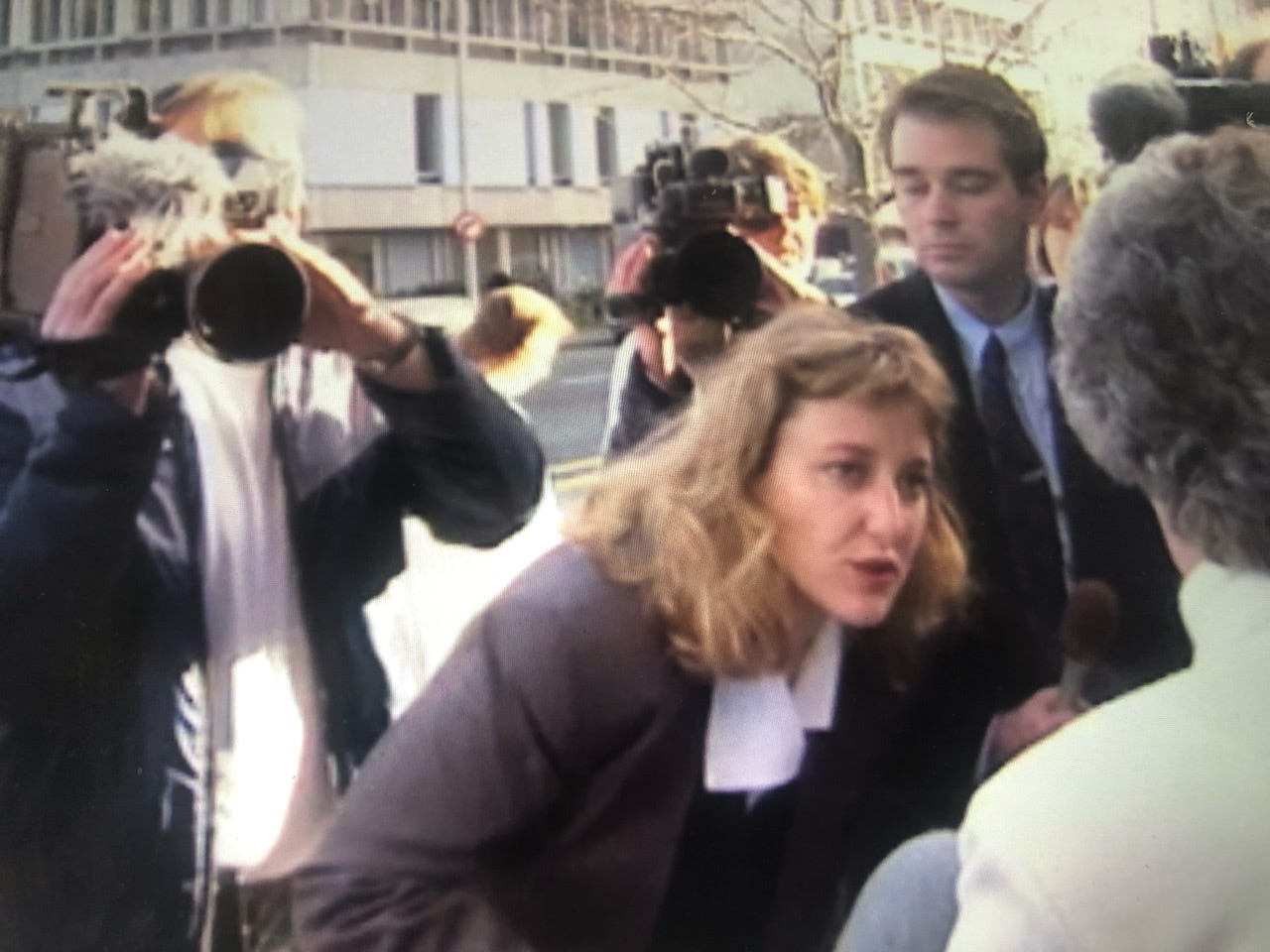
A few years later, as a police reporter for RNZ, I found myself in Gay Oakes’ lounge, where she lived with her six kids, the youngest only four months old, in the Christchurch suburb of Sydenham. I just looked it up on streetview. The house is no longer there. In its place, and on the section out the back, are modern townhouses.
The section out the back is where, in January 1993, Gay Oakes, with the help of a friend, dug a hole and buried the body of her ex-partner, Doug Gardner. Fourteen months later, following an anonymous tipoff, police exhumed his remains, and The Body in the Garden case began.
In her statement to police at the time, and later in court, Oakes said she had not meant to kill him. She said when he had come to her house in the middle of the night, demanding to be let in, she put prescription drugs in his coffee.
Mostly from that time I remember the ever-terrified look on Gay Oakes’ face, and somewhat weirdly, my main memory of her house that day is of the newborn kittens wobbling on shaky legs around the lounge. Given what was about to happen to her, what would become of the children? Obviously. But what about those kittens?
At her trial, a new term entered the national lexicon.
Battered Woman Syndrome.
Her lawyer sought to offer as a defence that ten years of violence, abuse, and rape had preceded the killing. The defence was unsuccessful, and was rejected too by the Court of Appeal and later the Privy Council.
Oakes’ six children were shared among family members in New Zealand and Australia. No, I don’t know what happened to the kittens.
From whichever way you looked at it, the case was extraordinarily sad, and maddening.
Journalist Melanie Reid would later broadcast an utterly compelling interview with Oakes for 20/20.
Sunday evening current affairs dominated television viewing, and competition between networks was intense. Journalistic legend had it that a competing reporter had taken flowers to Oakes, while Reid took fish and chips.
Securing an interview like that takes far more than that, of course, and Reid is a master of the art: aside from Oakes she got the exclusives with Peter Ellis, David Bain, and many more.
Out of interest I messaged her while writing this to ask whether the fish and chips story was true.
‘You can’t eat flowers,’ she said, typically Mel.
By 2000, the Law Commission proposed changes to New Zealand laws to better reflect the legal issues faced by abused women.
And in October 2002, after serving eight years in prison – two less than the minimum ten years – Gay Oakes was paroled, with the National Parole Board, as it was called at the time, stating that the minimum period was ‘unduly inflexible in the particular circumstances of battered women’.
In the decades since, I’ve returned to the issue of family violence more often than I would have liked. And last week I reported on a new piece of research that, given everything I’d seen, shouldn’t have surprised me as much as it did.
The survey was conducted by anti-violence charity The Backbone Collective, alongside wānanga and talanoa carried out by the Papakāinga Trust.
You can read my story about it on Stuff. The almost 200-page Backbone report, Just Ticking The Box, was what prompted the reporting.
The question the research posed was simple. In a country where a key state response to family violence is stopping-violence programmes, how do we know they’re working? Who do we ask?
The thing that surprised me was that for decades, success has largely been measured in two ways: by what men say about their own violence, and by whether they come back before the courts. But we have no consistent, measurable way of asking women whether they’re safer as a result of their abusive partner turning up each week to a programme.
I use ‘women’ advisedly here. After the story ran, I got several responses from male victims of family violence, who wanted to know when their stories would be told. It’s a fair question: nobody is claiming family violence is purely the domain of men. But this research was about stopping-violence programmes, where nine out of ten attendees are men. And the research surveyed only women by design.
The message that came through the research as loudly as that awful door-slamming, but far more effectively, was that those women did not want safety measured by the completion of a programme, which, to so many of them, was all the state seemed to care about.
After my story was published, I got a text. It turns out – this is New Zealand after all – that I know one of the women surveyed.
After their relationship broke up, she had told me what had happened to her.
What I didn’t know was that the worst abuse she experienced happened while he was attending a stopping-violence programme.
And yes, he got the completion certificate when he finished the course.
Which, I suppose, is why I’m still writing about this.
Paula. You know this well. Government departments live by statistics. Meaningless KPI numbers and easily published numbers ‘bites’ that populate reports and releases. Numbers this, numbers that. I’ve seen it firmly entrenched in local and by extension central. Effectiveness is more difficult, requires long term commitment, and can lead to awkward questions; ambitious middle managers, executives, and minsters don’t like questions that can inhibit budgets and careers. It’s always the humans at the end of the chain that pay the price, not knowing there is a seperate yet parallel game afoot. Failure gift wrapped as success.
Fantastic post, and thanks for amplifying the Backbone Collective's all-important work.